Looking back @ Unit 1-6 (Taken from blog. Posted by other students)
Need Help? Check back to the class wiki for help, Here
Key terms and formulas.
Credit & Interest I=Prt | A=P+I | A=P[1+r/n]nt
I = Interest
P = Principal
r = Annual Percent Rate (expressed as a decimal)
t = Length of time in years
------------------------------------------------------------------------
A = Total Amount, including principal and interest
P = Principal
r = Rate
n = Number of compounding periods per year
t = time in years
------------------------------------------------------------------------
The Rule of 72
- To quickly estimate the length of time it takes for investment to double, use the 'Rule of 72'. All you need is the interest rate and the number 72. | Divide 72 by interest rate.
-----------------------------------------------------------
Compound Interest:
> Interest calculated on both the principal and the accrued interest.
Compounding Period:
> Period of time which interest is computed.
Finance Charge:
> Fee charged for the use of credit or the extension of existing credit. May be a flat fee or a percentage of borrowings.
Interest:
> a fee paid for borrowing money or earned for lending money
Principal:
> The amount invested or borrowed.
Simple Interest:
> A method of calculating the interest charge on a loan
Credit:
> Ability to obtain goods or service before payment, based on the trust that payment will be made in the future: "Unlimited credit"
Cash Advance:
> Provided by many credit card issuers allowing cardholders to withdraw a certain amount of cash.
Down Payment:
> Payment made in cash during the onset of the purchase of an expensive good/service.
Loan:
> A thing that is borrowed, especially a sum of money that is expected to be paid back with interest.
Amortization Period:
> Period of time for economic recovery of the net investment project.
Line of Credit:
> Credit Line: The maximum credit that a customer is allowed.
Overdraft Protection:
> Occurs when withdrawals from a bank account exceed the available balance.
Default:
> Failure to fulfill an obligation, especially to repay a loan or appear in a court of law.
Collateral:
> Something pledged as a security for repayment of a loan.
Asset:
> Useful or valuable thing, person or quality
> Property owned by a person or company, regarded as having value and available to meet debts, commitments or legacies.
-------------------------------------------------------------------------------------------
Personal Budgeting
Recurring Expenses:
> Expenses that you deal with on a regular basis. Ex: Rent, Electricity, Car Loan, etc.
Variable Expenses:
> Expenses that change weekly or monthly. Ex: Food, Phone bill, Car insurance, shopping, hydro.
Unexpected Expenses:
> Expenses that you didn't expect to happen. Ex: Flat tire, Chipped window, Healthcare.
Budget:
> A balanced estimate of your income and expenses. Ex: Amount of money within your pocket.
Regular Income:
> Income that is received in the same amount. Ex: Wage, Salary, Income.
Variable Income:
> Income that is received at in different amount almost every time. Ex: Commission, Gifts, Tips, etc.
Conservative Budget:
> Underestimates income and overestimates expenses
Surplus:
> Amount of something left over when requirements have been met.
> More than what is needed or used; excess.
Deficit:
> The amount by with something, especially a sum of money, is too small.
> An excess of liabilities over income or assets in given period.
Need more help? Click Here (Thanks Martin)
------------------------------------------------------------------------------------------
Geometry: Key Terms: Mikko's Post | Jaypee's Post | Cristian's Post
------------------------------------------------------------------------------------------
Trigonometry: Need help on Trigonometry? Click Here
SOH-CAH-TOA
Sine (sin) = Opposite/Hypotenuse
Cosine (cos) = Adjacent/Hypotenese
Tangent (tan) = Opposite/Adjacent
Angles of Elevation and Depression (Right-Angled Triangles)
Hey! Click me :D
------------------------------------------------------------------------------------------------------------
Relations & Patterns:
Dependent Variable:
> a variable in a functional relation whose value is determined by the values assumed by other variables in the relation,
Independent Variable:
> a variable in a functional relation whose value determines the value or values of other variables
Linear Relations:
> is the relationship between two variables that appears on a straight line.
Interpolation:
> estimating values that lie between two data points.
Extrapolation:
> estimating values that lie beyond the graph
Undefined Slope:
> the slope of a vertical line; all points on the line have the same x-coordinate.
Zero Slope:
> the slope of a horizontal line has a 0 slope; all its points have the same y-coordinate.
Slope:
> A number which is used to indicate the steepness of a line. Indicated by the letter m__________________________________
Slope Formulas: Need Help? Check this out.
Slope-intercept Form | Point Slope Form
y = Dependent Variable | m = Slope | x = Independent Variable | b = Fixed Value> The amount invested or borrowed.
> Property owned by a person or company, regarded as having value and available to meet debts, commitments or legacies.
Personal Budgeting
Recurring Expenses:
> Expenses that you deal with on a regular basis. Ex: Rent, Electricity, Car Loan, etc.
Variable Expenses:
> Expenses that change weekly or monthly. Ex: Food, Phone bill, Car insurance, shopping, hydro.
Unexpected Expenses:
> Expenses that you didn't expect to happen. Ex: Flat tire, Chipped window, Healthcare.
Budget:
> A balanced estimate of your income and expenses. Ex: Amount of money within your pocket.
Regular Income:
> Income that is received in the same amount. Ex: Wage, Salary, Income.
Variable Income:
> Income that is received at in different amount almost every time. Ex: Commission, Gifts, Tips, etc.
Conservative Budget:
> Underestimates income and overestimates expenses
Surplus:
> Amount of something left over when requirements have been met.
> More than what is needed or used; excess.
Deficit:
> The amount by with something, especially a sum of money, is too small.
> An excess of liabilities over income or assets in given period.
Need more help? Click Here (Thanks Martin)
------------------------------------------------------------------------------------------
Geometry: Key Terms: Mikko's Post | Jaypee's Post | Cristian's Post
------------------------------------------------------------------------------------------
Trigonometry: Need help on Trigonometry? Click Here
SOH-CAH-TOA
Sine (sin) = Opposite/Hypotenuse
Cosine (cos) = Adjacent/Hypotenese
Tangent (tan) = Opposite/Adjacent
Angles of Elevation and Depression (Right-Angled Triangles)
Hey! Click me :D
------------------------------------------------------------------------------------------------------------
Relations & Patterns:
Dependent Variable:
> a variable in a functional relation whose value is determined by the values assumed by other variables in the relation,
Independent Variable:
> a variable in a functional relation whose value determines the value or values of other variables
Linear Relations:
> is the relationship between two variables that appears on a straight line.
Interpolation:
> estimating values that lie between two data points.
Extrapolation:
> estimating values that lie beyond the graph
Undefined Slope:
> the slope of a vertical line; all points on the line have the same x-coordinate.
Zero Slope:
> the slope of a horizontal line has a 0 slope; all its points have the same y-coordinate.
Slope:
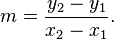
> A number which is used to indicate the steepness of a line. Indicated by the letter m__________________________________
Slope Formulas: Need Help? Check this out.Slope-intercept Form | Point Slope Form

_____________________________________________
m = Slope | rise/run or y2-y1/x2-x1
----------------------------------------------------------------------------------------

No comments:
Post a Comment