Tuesday, November 26, 2013

Due to my forgetfulness, I was not able to make a post for yesterday and I will try my best to combine both Tuesday's and Monday's lessons.

We are still working on our Trigonometry unit and are currently focusing on Right Triangles.

- - - - - -

Booklet


We finished example 2 on our Trigonometry booklet (the solution will be posted below) but we did not do any examples in the booklet for today.


*Solve for the radius first then solve the volume of the cone*


*Round off answers to three decimal places*
**(ex. 55.2644 => 55.264)**

- - - - - -

Assignments

We got a worksheet about right-angled triangles in different positions.
  • The first part has you finding the missing angle to the nearest degree
  • The second part has you find the missing side and round to the nearest tenth
  • The third part is to find the value of each trigonometric ratio
  • The fourth part is to find the value of each trigonometric ratio to the nearest ten-thousandth
  • The last part is to find each angel measurement to the nearest degree
The answers for every question is provided on the last page but they do not give you the solution. It would be best to write down the solution so you can have something to study for tests/quizzes.

We were also given an assignment about solving right triangles and will be working on the solutions for the next class. 

- - - - - -

Tests/Projects

There will be a Trigonometry test but the date is still unknown.

There is a Trigonometry project that was recently given to us but a due date has yet to be confirmed but it's encouraged to get it done soon.

- - - - - -

- Rhea 


Sunday, November 3, 2013

Hey folks, it's me Emily. On Friday, we pretty much worked on our own basis unlike the other days, we talked about Halloween and what not, also we were handed three worksheets, Surface Area Of Cabinets, Building A Shipping Crate, and Surface Area Of Prisms which Mr.Piatek assigned us to do for homework.

In our unit to come, we will be continuing our trigonometry, our volume capacity of prisms and Cylinders, the volume and capacity of Spheres, Cones and Pyramids, and Composite Objects.

Here is a little link to a video how to solve for volume and surface area of shapes.
http://www.youtube.com/watch?v=RnAaJPb7X0c

So I will see all of you tomorrow at school, in the class as usual, hope everyone had a great weekend, and just a little reminder to bring a can of drink to school in the morning, for a fun activity as what Mr.Piatek said, but for now farewell.


Wednesday, October 30, 2013

Hey, people It`s Cristian! And I`m here to bring you back the lessons that we've encountered from yesterday`s class.
First of all we started watching video about the Surface Area of Prism and we learned that surface area measures the combined area of all the surfaces of a 3D shape. Moving on, Mr. Awesome P started giving us the mental math worksheet. Then we end up with another worksheet and It`s about `Rectangular Prism` which is going to be our topic for today I guess.

Formula: Rectangular Prism


I actually found this great tutorial video for Rectangular Prism. Please Click Me


By the way,`Happy Halloween` everyone!


Reminders:
A CAN OF SODA FOR FRIDAY. DON`T FORGETz!
and lastly DON`T FORGET to bring costume and dress up for today. that`s all for me.

PEACEOUT!!!

Tuesday, October 29, 2013

Hello guys, it's Jaypee. We started the class with another mental math quiz and continue to begin with our unit about Geometry. We also did some work & Mr. P explained some of the key terms about Surface area of Prisms on the booklet.


These are the key terms :
  • Surface area is the area required to cover a 3D shape. It is measured in square units.
  • Volume is the amount of space occupied by a 3D object. It is measured in cubic units.
Surface area represents the area of all faces of an object, and can be defined in two ways:

      Lateral Surface Area
  • Pyramids: Area of all faces (triangles) except the base.
  • Prisms: Area of all faces (rectangles) expect the ends.
      Total Surface Area
  • Area of all faces including the ends or base.                                                                                
 (Note: A special case, which will be dealt with is the surface areas of spheres.)

A prism is a 3D object that has two identical ends and all flat sides.


Mr. P also gave us a work sheet about "Sketching Nets of Solids".

We also did the Example 2 on the booklet. This might help you understand how we did it.

I also found a good tutorial video about the Surface Area of Prisms. This also might help you to understand the lesson. To watch please Click here


In addition to this, Here are some of the basic formulas that might help you as we walk throughout this unit.


Lastly, don't FORGET to bring a can of Soda on Friday Nov 1, 2013


Monday, October 28, 2013

Hey guys, its Mikko! Today we learned about the surface area of prisms. We also did a little bit of solving  proportion. Here is the key terms about surface area.

Key Terms

Cone: cone is a three-dimensional geometric shape that tapers smoothly from a flat base (usually circular) to a point called the apex or vertex.

Cylinder: cylinder is one of the most basic curvilinear geometric shapes, the surface formed by the points at a fixed distance from a given line segment, the axis of the cylinder.

Dimension: A dimension is space or object is informally defined as the minimum number of coordinates needed to specify any point within it.

Prism: A prism is a transparent optical element with flat, polished surfaces that refract light. At least two of the flat surfaces must have an angle between them.

Pyramid: pyramid is a structure whose shape is roughly that of a pyramid in the geometric sense; that is, its outer surfaces are triangular and converge to a single point at the top.

Sphere: sphere is a perfectly round geometrical and circular object in three-dimensional space that resembles the shape of a completely round ball

Surface Area: A surface area is the total area of the faces and curved surface of a solid figure.

Volume CapacityVolume is the quantity of three-dimensional space enclosed by some closed boundary and Capacity is a one way of measuring a set's size.

Lateral Surface Area: Lateral surface of a solid is the face or surface of the solid on its sides. 

Formulas:

Surface Area: Cm 2, Ft 2, Km 2

Volume: Cm 3, Ft 3, Km 3

Reminders:

Bring a can of Soda on Friday Nov 1, 2013

Bring a box for Tomorrow Tuesday Oct 29, 2013


Wednesday, October 23, 2013

Hey guys, it's Jennifer! Today for class, we started off with yet another mental math quiz and begin with our new unit about Geometry. We were given a handout assignment that was already marked by peers volunteering to do the answers on the board, if you missed that assignment, you can always ask Mr. P for the handout because that assignment will help you with the rest of our unit as it relates to the unit. Towards the end of the class, we were given homework on surface areas of 2D figures. The assignment has a variety of questions that practice the surface area of different figures, so hopefully you all get a clear understanding of that concept and if you don't, you guys can always flip through our unit book that has examples and the formulas! Not to mention, at the beginning of the year, Mr. P handed all the students a formula sheet with all the formulas, you can possibly think of and maybe that can help you guys as well.
Tomorrow will be our budgeting test and I hope you guys do well as I hope for myself to do well too! Good luck to all you guys and I'm sure we'll all knock it outta the park with our awesome marks! Also, don't forget to prepare yourself a cheat sheet just so it makes your life a tad easier if you're struggling, but if you don't need one, then show the test what you got!

P.S: Don't forget to bring your 3D objects for Mondays class
Hope you guys all studied hard and achieve the marks you're aiming for :)  

Wednesday, October 16, 2013

Hey guys! So today in class, we were about to do another quiz right as class started but a couple of us convinced Mr. P to let us finish some things since it was a short period. For example, he let us finish the last two examples of Analyzing Budgets, and that's pretty much all we did today in class.

If you guys forgot how to do them, click HERE as a reminder on how we did both examples.

Reminders:
-IPHOTO PROJECT: Due this Friday, October 18
-BUDGETING PROJECT: Due Friday, October 18
-PERSONAL BUDGETS UNIT TEST: Moved to Tuesday, October 22

Tuesday, October 15, 2013

Hello guys, it's Darnell. I'll be scribing for October 15, 2013.

Today we started the class off with a quick quiz.

Life gave Mr. P a curve ball because his dryer began to malfunction. Mr. P retaliated by buying a new one for 1250 instead of 1500!!

Then Mr. P began the actual lesson, we talked about circle graphs and how all our monthly expenses can be divided in a circle. It was very useful and can help someone evaluate how much they need to spend on each part of their lives.

If you guys ever forget on what circle graphs are, here's an extravagant video on what circle graphs are and how to make them. Click here plz

I'd also like to remind you guys about a test coming up this friday. The iPhoto project is also due the same day.

Monday, October 14, 2013


Hey everybody its Martin, and i'm going to give you a little review of what we did on Fridays class October 11th. We started the class out by having a group present their Financial Planning for a Sport, which showed us how expensive a sport can be. Then Mr.P gave us a choice to work on either our Budgeting to Live away from home Project or this new assignment The Budgeting Process.

If haven't looked over the Budgeting Process Worksheet here is a little review. Click Here

A Few Key Terms :

Surplus: An amount or quantity that is greater than needed.

Deficit: The amount by which a sum of money falls short of the required amount.

Don't forget about the Budgeting Away From Home Project and the iPhoto Project which are both due on Friday October 18th. Also don't forget about our unit test which we will be having on the same day as those projects are due

Thursday, October 10, 2013

Hey it's John, sorry for not post Tuesday - Wednesday (October 8 - 9) and Thursday (October 10).
On Tuesday's class we learned about The Budgeting Process and the Consumers Law, Mr. P,  had explained this law. On Wednesday we finished up learning about The Budgeting Process

Conservative Budget:
 > Underestimates income and overestimates expenses.
Surplus:
 > Amount of something left over when requirements have been met.
 > More than what is needed or used; excess.
Deficit:
 > The amount by which something, especially a sum of money, is too small.
 > An excess of liabilities over income or assets in a given period.

Thursday (October 10): 

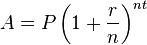
A = P \left(1 + \frac{r}{n}\right)^{nt}Thursday morning, another quiz. Fun right? Today after finishing up example 2 by using the Annual Compound formula. We also talked about the usage of a spread sheet.


*Remember that:
   Tomorrow > Presenting "Financial Planning"
   October 15 or 18 > iPhoto Project is due
   End of this unit > Budgeting Project*

Monday, October 7, 2013

In today's class. Mr. P gave us a new assignment called Personal Budgets, Mr. P has said to finish all of the assignment as it will help in the future and you should finish it someone of the keyterms for some questions are as follow- 

Recurring Expenses: Expenses that you deal with on a regular basis.
Ex: Rent, Orthodontics, Morgage, Car loan

Variable Expenses: Expenses that keep changing weekly or monthly.
Ex: Food, Phone Bill, Clothes, Hydro, Drivers License Fee, Car Insurance

Unexpected Expenses: Expenses that you don't expect to happen from time to time.
Ex:Flat tire, Chip in Window, Health Care, Funeral Expenses.

These terms will help you in some of the starting questions and as well Mr. P has handed back the unit test and has asked to check for any mistakes in counting the marks.

Thursday, October 3, 2013

Budget Unit Key Terms

Today we talked about some key terms and those key terms were:

Budget: A balanced estimate of your income and expenses.
 Ex: Amount of money in your pocket

Regular Income: Income that is received in the same amount.
Ex: Wage, Salary, Income

Variable Income: Income that is received at in different amount almost every time or not received every pay cheaque.
 Ex:Commission, Gifts, Birthday Presents, Bonuses, Tips

Recurring Expenses: Expenses that you deal with on a regular basis.
Ex: Rent, Orthodontics, Morgage, Car loan

Variable Expenses: Expenses that keep changing weekly or monthly.
Ex: Food, Phone Bill, Clothes, Hydro, Drivers License Fee, Car Insurance

Unexpected Expenses: Expenses that you don't expect to happen from time to time.
Ex:Flat tire, Chip in Window, Health Care, Funeral Expenses.

Saturday, September 28, 2013


Key Terms

Compound Interest:
> Interest calculated on both the principal and the accrued interest.
Compounding Period:
> Period of time which interest is computed.
Finance Charge:
> Fee charged for the use of credit or the extension of existing credit. May be a flat fee or a percentage of borrowings.
Interest:
> a fee paid for borrowing money or earned for lending money
Principal:
> The amount invested or borrowed.
Simple Interest:
> A method of calculating the interest charge on a loan
Credit:
> Ability to obtain goods or service before payment, based on the trust that payment will be madde in the future: "Unlimited credit"
Cash Advance:
Provided by many credit card issuers allowing cardholders to withdraw a certain amount of cash.
Down Payment:
Payment made in cash during the onset of the purchase of an expensive good/service.
Loan:
> A thing that is borrowed, especially a sum of money that is expected to be paid back with interest.
Amortization Period:
Period of time for economic recovery of the net investment project.
Line of Credit:
> Credit Line: The maximum credit that a customer is allowed.
Overdraft Protection:
> Occurs when withdrawals from a bank account exceed the available balance.
Default:
> Failure to fulfill an obligation, especially to repay a loan or appear in a court of law. 
Collateral:
> Something pledged as a security for repayment of a loan.
Asset:
> Useful or valuable thing, person or quality
> Property owned by a person or company, regarded as having value and available to meet debts, commitments or legacies.

Thursday, September 26, 2013

Hello everyone! I am Queenie and I am going to tell you what we did in class today.

In today's class. Mr. P introduce a new topic on us PERSONAL LOANS, LINES OF CREDIT AND OVERDRAFTS. and Mr. P talk about some of the Key terms that we need to review and memorize some of definition because the key terms are included in the test. and I just found good tutorial on personal loans, line of credit CLICK HERE .

That link will gives you all the steps how to calculate the question about loans, or a line of credit. and some key terms too.

I would like to remind you about ..
Credit Card Project that will be due on Monday and 
to review the unit 1- Credit & Interest for our first unit test that will be on Monday too also
iPhoto Project will be due on 18th of October


Tuesday, September 24, 2013

Store Promotion

Hi Everyone, I'm Jane. In today's class, Some of us forgot to bring a flyers, so Mr. P.Mr. gave us a flyers and looked for Store Promotion.  We reviewed store promotions and we saw the difference offers from every stores. It's up to you which store you will buy, what do you think is much better for you or just comfortable to it. Then we answered the first problem in our booklet.

Example given:

a) If she choose option 1, She would pay the deferred payment plan of $899.99 including the delivery charge of $30.00 and the administration fee of $75.00.

 $30.00 + $75.00 =  $105.00

b) Calculate the total cost of the Sofa if she buys it on the deferred payment plan.

Deferred payment plan of  $899.99 plus the Delivery charge of  $30.00 plus the Administration Fee of  $75.00 total of  $1004.99

c) If Mi Jung used her credit card to buy a sofa.
* used the formula of Simple Interest.

I=Prt
I=(899.99)(0.21)(31/365)
I=16.05 + 899.99
I=916.04

d) Mi Jung should've save $105.00 if she bought it in cash for the sofa, rather than using the deffered payment plan.

$1004.99 - $899.99 = $105.00

That's how we calculate those problems, I hope you understand what I have explained.

By the way guys I would like to remind you about to our projects ^_^
Credit Card Project will be due on Friday
iPhoto Project Rubric will be due on 18th of October

Thursday, September 19, 2013

Hi everyone I am Natasha here and I am going to tell you what we did in class today. In today's class Mr.P stared off by telling us that his house alarm went off and how he don't care if his belonging get stolen. After that Mr.P showed us some new links that can help us understand simple interest and compound interest more easer you can find the links at our class website just click Essential mathematics 30S then look for Extra class notes and resources.Then we did some examples with simple interest and compound interest in our book pages 18-19 and don't worry if you were absent just go on our class website at iLearnwithmrp.pbworks.com to see today's lesson, then we got our homework which is Understanding a credit card statement worksheet that's due tomorrow so don't forget to do it :)

P.S the credit card project is due on the day of our test which is the Friday of next week so get stared now and the iPhoto project is due Oct 18 so don't forget to do it.     

Monday, September 16, 2013

Hello everyone! I'm Ashveer, from your Grade 11 essential math class, and I'll be reviewing what we learned on September,16, just in case you were absent or just need to review the material.

 Basically, what we did is start a worksheet (Compound Interest) and worked on that for the majority of the class. Other than that, we hadn't learnt any new material.

 If you had forgotten how to do the questions, just remember that you have the formula in your booklet as well as examples that we did in class! I also found a video that show you ow to calculate compound interest!


 Just a little reminder that we also have a credit card report due on the day of our test, which will most likely be next week or the week after. Also, we have our IPhoto project that's due in October. Better to finish it now than last minute!  

Have a good day everyone! 

Friday, September 13, 2013

Hello everyone! It's Angela and i'm here to let you guys know exactly what happened in Friday's class, on September 13th. Whether you were absent or maybe you did not understand what we were learning, hopefully this post will help you out!

On Friday we learned Compound Interest. It is similar to Simple Interest but includes just a few more steps. In class, we worked individually on the first four examples in the booklet. As the class progressed, Mr. P showed the steps to a few of the examples on the smart board to make sure everyone was understanding how to use the formula. Both the simple interest and compound interest  work sheets can be found here. It is expected out of the class to do both examples 5 and 6 for homework. We learned more in depth about the difference between compound interest and simple interest, and which one would give the customer more money. We were even introduced to Rule 72, which can be found in your booklet. If you still cannot get the hang of the new formula, its ok! Here is a video I found on compound interest, just to jog your memory


We were given a credit card project that consists of a two page report on three different credit cards. Two will be credit cards such as MasterCard, Visa, etc. and the third will be a department store card, such as The Bay or Sears. To complete the project to the best of our abilities, Mr. P handed out a criteria sheet. Make sure to receive the assignment from Mr. P! The project will be due on the day of the unit test, which will approximately be in a week or so. Don't procrastinate!

Don't forget that the iPhone project will be due on the 18th of October! Any questions concerning either projects, assignments, or tests should be asked directly to Mr. P or any of our classmates.

Hope this helped and have an awesome weekend everyone!
                                                                                                 -Angela :-)

Thursday, September 12, 2013

Hi everyone.
I just found good tutorial on Simple Interest.
Click here to watch the video.

Wednesday, September 11, 2013

So for the pass couple of days in math class we have made a google account for the class and then mine just started working today !! Oh yeah aha ... we have a photo project due on the 18 next month. we got a booklet on how to work with interest..  ðŸ˜ŠðŸ˜ŠðŸ˜Š the worksheet we are working on atm is simple interest worksheet. The formula for that is I=prt 

Tuesday, September 10, 2013

In class today we learned about formulas for finding interest, principal, rate and time. For example the formula to find Interest (I) is I over PRT.

Tuesday, August 27, 2013

Welcome Back Grade 11 Students

Welcome to our blog. This space is designed for students of Maples Collegiate, attending Essential Mathematics 30S class with Mr.P. We are going to use this space to discuss our daily lessons, ask questions you didn't get a chance to ask in class, and to share your knowledge with other students. Most importantly we will use this blog to reflect on what we're learning.
Have a great semester.