Thursday, January 23, 2014

Looking back @ Unit 1-6 (Taken from blog. Posted by other students)
 Need Help? Check back to the class wiki for help, Here
Key terms and formulas.

Credit & Interest                                         I=Prt | A=P+I | A=P[1+r/n]nt
I = Interest
P = Principal
r = Annual Percent Rate (expressed as a decimal)
t = Length of time in years
------------------------------------------------------------------------
A = Total Amount, including principal and interest

P = Principal
r = Rate
n = Number of compounding periods per year
t = time in years
------------------------------------------------------------------------
The Rule of 72
- To quickly estimate the length of time it takes for investment to double, use the 'Rule of 72'. All you need is the interest rate and the number 72. | Divide 72 by interest rate.
----------------------------------------------------------- 

Compound Interest:
> Interest calculated on both the principal and the accrued interest.
Compounding Period:
> Period of time which interest is computed.
Finance Charge:
> Fee charged for the use of credit or the extension of existing credit. May be a flat fee or a percentage of borrowings.
Interest:
> a fee paid for borrowing money or earned for lending money
Principal:
> The amount invested or borrowed.
Simple Interest:
> A method of calculating the interest charge on a loan
Credit:
Ability to obtain goods or service before payment, based on the trust that payment will be made in the future: "Unlimited credit"
Cash Advance:
Provided by many credit card issuers allowing cardholders to withdraw a certain amount of cash.
Down Payment:
Payment made in cash during the onset of the purchase of an expensive good/service.
Loan:
A thing that is borrowed, especially a sum of money that is expected to be paid back with interest.
Amortization Period:
Period of time for economic recovery of the net investment project.
Line of Credit:
Credit Line: The maximum credit that a customer is allowed.
Overdraft Protection:
Occurs when withdrawals from a bank account exceed the available balance.
Default:
Failure to fulfill an obligation, especially to repay a loan or appear in a court of law. 
Collateral:
Something pledged as a security for repayment of a loan.
Asset:
> Useful or valuable thing, person or quality
> Property owned by a person or company, regarded as having value and available to meet debts, commitments or legacies.
-------------------------------------------------------------------------------------------

Personal Budgeting
Recurring Expenses:
 > Expenses that you deal with on a regular basis.                 Ex: Rent, Electricity, Car Loan, etc.
Variable Expenses:
 > Expenses that change weekly or monthly.           Ex: Food, Phone bill, Car insurance, shopping, hydro.
Unexpected Expenses:
 > Expenses that you didn't expect to happen.                       Ex: Flat tire, Chipped window, Healthcare.
Budget:
 > A balanced estimate of your income and expenses.                Ex: Amount of money within your pocket.
Regular Income:
 > Income that is received in the same amount.                          Ex: Wage, Salary, Income.
Variable Income:
 > Income that is received at in different amount almost every time.        Ex: Commission, Gifts, Tips, etc.
Conservative Budget:
 > Underestimates income and overestimates expenses
Surplus:
 > Amount of something left over when requirements have been met.
 > More than what is needed or used; excess.
Deficit:
 > The amount by with something, especially a sum of money, is too small.
 > An excess of liabilities over income or assets in given period.
Need more help? Click Here (Thanks Martin)
------------------------------------------------------------------------------------------

Geometry: Key Terms: Mikko's Post | Jaypee's Post | Cristian's Post
------------------------------------------------------------------------------------------

Trigonometry:                           Need help on Trigonometry? Click Here
SOH-CAH-TOA
Sine (sin) = Opposite/Hypotenuse
Cosine (cos) = Adjacent/Hypotenese
Tangent (tan) = Opposite/Adjacent
Angles of Elevation and Depression (Right-Angled Triangles)
Hey! Click me :D
------------------------------------------------------------------------------------------------------------

Relations & Patterns:                                              
Dependent Variable:
 > 
a variable in a functional relation whose value is determined by the values assumed by other variables in the relation,
Independent Variable:
 > 
 a variable in a functional relation whose value determines the value or values of other variables
Linear Relations:
 > is the relationship between two variables that appears on a straight line.
Interpolation:
 > estimating values that lie between two data points.
Extrapolation:
 > estimating values that lie beyond the graph
Undefined Slope:
 > the slope of a vertical line; all points on the line have the same x-coordinate.
Zero Slope:
 > the slope of a horizontal line has a 0 slope; all its points have the same y-coordinate.
Slope:
 > A number which is used to indicate the steepness of a line. Indicated by the letter m
__________________________________  

Slope Formulas:                                                                      Need Help? Check this out.
Slope-intercept Form | Point Slope Form                                                         

y = Dependent Variable | m = Slope | x = Independent Variable | b = Fixed Value

y = mx + b \,


_____________________________________________

m = Slope | rise/run or y2-y1/x2-x1
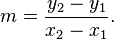
m = \frac{y_2 - y_1}{x_2 - x_1}.   


----------------------------------------------------------------------------------------

Statistics:Check out the post under this one.

Hey everyone! Although I'm sure everyone's ability to understand the unit of Statistics is very strong, I'm here to sum up what we've learned throughout our last unit together just as a reminder for those of you who don't know how to do something, statistically! (Get it? Ha, okay....Let's get started!)


First off, we learned how to do Broken Line Graphing (Broken Line Graphs use points to show information and connect points with lines. Line graphs display continuous data using two axes which are the X and Y, but they can be used to describe individually separate data that represents an average for something you're trying to find information on).

To identify what an independent and dependent variable is and means, view Angela's post underneath this post to refresh your mind! (But remember that the independent variable is always on the X axis and the dependent variable is always on the Y axis).

So for line graphing, you're going to have to follow these 5 steps before creating one:
1. Identify which variable is independent and dependent.
    It's important to know which one is which so you're able to label the data for your graph correctly:
    EX: Graphing the thickness of the ice on Lake Winnipeg compared to the month of the year, the thickness of the ice is the dependent variable (Y axis) and the month of the year is the independent variable (X axis).

2. Find the range of the data between both variables. 
    You need to find out the maximum and minimum given data to include along on each axis:
     EX: The given data: October - 0cm, November - 10cm, December - 30cm, Januaury - 75cm, February - 75cm, March - 55cm, April - 28cm, May - 6cm, June - 0cm.
(The thickness goes from 0 to 75cm; The months go from October to June).

3. Draw and label the axes of the graph.
    You need to draw the graph before adding points so that you can make sure that the scale is correct and your labelling is in the proper spots. Make sure the scale is even to give an accurate illustration of the data.

4. Insert the points onto the graph.
    Although trickier than drawing and labelling the information onto a bar graph or histogram, make sure your points line up with the values on the vertical and horizontal axes. Find where to start off from the independent variable axis and make your way up towards the dependent variable axis to finish plotting your data points.

5. Connect the points using straight lines.
    Use a ruler or a straight lined-edge to connect each point with each other.
*If you need a visual representation with how to do a broken line graph, watch this video here(The only difference is that it uses completely different information than the examples shown above).
*Or!!! Check out the examples we did in class with Mr. P!


The next topic we learned was the basic Bar Graph, which I'm sure we all learned back in elementary when we would graph our snacks in class. But basically, bar graphs are graphs that use vertical or horizontal lines to represent individually separate (discrete) data.

1. Make sure your data is sort into categories. 
    EX: Phys Ed - 179 students, Music - 109 students, English - 65 students, French - 51 students, Science - 47 students, Art - 28 students,  Math - 14 students.

2. Figure out the maximum sorted out data.
     
This will be helpful so you know how large to make your graph, as well as you know how much the largest bar will be.
    EX: Maximum: Phys Ed - 179 students.

3. Determine the scale of the quantitative axis (X axis). 
    So your bar graph is drawn accurately, you need to have a reasonable number of equal increments labelled so you don't have too much or too little.

4. Draw and label your axes. 
    Draw your vertical and horizontal axes. The quantitative (X axis) always starts at zero and extend slightly pass the maximum in step 2. Also, don't forget to title your graph and title your vertical and horizontal axes as well.

5. Draw the bars so that the end approximately in line with the correct value on the quantitative axis. 
    It's important that the bars are as close as possible to the correct value along the quantitative axis so that anyone who looks at the graph will be able to read it, as well as identify the given data. It will also give an accurate visual representation to demonstrate the comparison between each category.
*Also, this is exactly the same way you would create a double-bar graph, except with two bars per category on the quantitative axis (X axis). But remember to create a legend to display which bar is for which!
*If you need a visual representation of how to create a bar graph, watch this video below!


The next type of graph we were exposed to were Histograms! They're usually used in science, where they represent experiments that have been repeated several times with range of results. Range is the difference between minimum and maximum values. 

Just like bar graphs, histograms also use quantitative and qualitative axes. The vertical axis displays the frequency, which shows how often something happens. This horizontal axis displays the range of data. Histograms usually look like bar graphs, but without the gaps in between because they show continuous data, unlike bar graphs where you can receive either continuous or discrete, as well as broken line graphs. 

1. Just like a bar graph, sort the data into categories from the least to the most.
   
For graphing students' marks on a test, the marks can range from 0% to 100%, but it doesn't necessarily mean someone got a 0% or a 100%. It's just what someone's able to receive as a mark. Also! You don't need to divide the information equally across the range axis (X axis), because 0% to 49% is for the F category, so you can visualize that the other categories would be somewhat smaller. 

2. Find the maximum frequency.
   
By finding out how high the tallest bar has to go up to, you can determine the range of frequency that you need to include on the graph. 

3. Draw and label your vertical and horizontal axes.
   
Before you even begin to draw the bars onto the graph for your given information, you need to have the axes drawn and labelled. 

4. Draw the bars for the graph. 
     Be sure to draw the bars as precise and close to each other as possible to the point where they're touching so they're as close to the actual value as possible in relation to the value on the axis
*If you require a visual representation, view the video below! (Skip to 2:42 to get to the actual graphing)


Lastly, we were taught how to do Circle Graphs! It represents different categories as parts of a circle, somewhat similar to slices of a pizza. Each 'slice' is labelled as a percentage, which reflects how much of the circle the 'slice' takes up, in comparison to the whole thing, which is 100%.
*I found a great video that does all the precise explaining on how to create a circle graph exactly how we did it during class!


I really hope this helped all of you for your statistics test tomorrow, as well as for our exam on Thursday, January 30th at 9 to 11AM in the gym. If you have any questions because anything on this post was not clear enough for you, please do not hesitate to ask Mr. P as he is there to help you with any questions you may have! Study hard and best of luck to all of us that day!!!!

Saturday, January 11, 2014

Hey guys! Long time no blogging! I am going to cover what we have learned so far in Relations and Patterns. It's obvious that as a class we struggled with this unit, especially while Mr. P was away. Now Mr. P is back (yay!) and we're finally getting the hang of it with his help. Hopefully my post will help you guys with anything you still don't understand!


Now, lets start from the beginning.


From what I noticed, we did very well with representing patterns with written equations. But to refresh your memory here is this short and sweet video on the subject here!


What we struggled with most was the difference between an independent  and dependent variable. Here are the definitions to both and i'll also throw in an example!


Independent Variable: It stands alone and is never changed by other variables you are trying to calculate and measure.
Dependent Variable: A variable that depends on other factors, sometimes it can be dependent on the independent variable, on other factors, or on both!


For example, Mr. P jogs every morning at 6 AM. Each morning, he runs further and for a longer amount of time.


DISTANCE                                                                                                                         TIME
200                                                                                                                                2 min
                                                                                                                                                         
600                                                                                                                                5 min
                                                                                                                                                       
1200                                                                                                                              10 min
                                                                                                                                                        
1600                                                                                                                              13 min
                                                                                                                                                      
1800                                                                                                                              15 min
                                                                                                                                                      
2200                                                                                                                              19 min
                                                                                                                                                          
2400                                                                                                                              20 min


Now before we even begin to graph this, we need to figure out what our independent variable is (which would go on our x axis) and our dependent variable (which would go on our y axis)
Ask yourself, which of these two variables, distance and time, can be changed due to whatever reason? Obviously, time can not be bent, and the distance Mr. P runs can be affected by any injuries, weather (if he is running outside) and for his own personal goals for his jog. But time will not change! So time would go on the x axis, because it is independent and distance would go on the y axis, because it is dependent on several different factors. Graphing the data is now the easiest part!  Make sense?


For this unit, our best friends are these two equations: y = mx + b and y2-y1
                                                                                                                 x2-x1
The first represents the equation for a linear pattern. (Dependent Variable= Slope x Independent Variable + Fixed value)
The second equation would calculate the slope of any linear equation. Voila~


As a class, we did this cool experiment in which we measured our height and our arm length. With Christian having the longest arm length, at 181 cm and Angela (me!) with the shortest, at 155 cm.
After measuring everyone in the class, we made a scatter plot with our data. Very simple, no one struggled with scatter plots and we all had a fun time doing the experiment.


With calculating slope, which is the steepness of a line, there are two ways of calculating it. The equation and simply counting the rise and the run. Both are quite simple! But you can choose your preferred method. I found this awesome (and short) video which covers both methods! The answers you seek are here.


Lastly, here is a video which goes more in depth on how y= mx + b can be put into use and how rise/run works!


Hopefully I covered anything that seemed confusing or frustrating. In summary, the hardest part to graphing is collecting your data and creating a correct table of values, which with some practice, isn't hard at all. Graphing the data will be the easiest part! For calculating slope, make sure you use the method you are most comfortable with (try to get use to using both!) and double check to make sure that your slope matches with the graph.
Good luck to you all and have an awesome weekend! The test for this unit is next Friday, January 17th.
-Angela

Tuesday, November 26, 2013

Due to my forgetfulness, I was not able to make a post for yesterday and I will try my best to combine both Tuesday's and Monday's lessons.

We are still working on our Trigonometry unit and are currently focusing on Right Triangles.

- - - - - -

Booklet


We finished example 2 on our Trigonometry booklet (the solution will be posted below) but we did not do any examples in the booklet for today.


*Solve for the radius first then solve the volume of the cone*


*Round off answers to three decimal places*
**(ex. 55.2644 => 55.264)**

- - - - - -

Assignments

We got a worksheet about right-angled triangles in different positions.
  • The first part has you finding the missing angle to the nearest degree
  • The second part has you find the missing side and round to the nearest tenth
  • The third part is to find the value of each trigonometric ratio
  • The fourth part is to find the value of each trigonometric ratio to the nearest ten-thousandth
  • The last part is to find each angel measurement to the nearest degree
The answers for every question is provided on the last page but they do not give you the solution. It would be best to write down the solution so you can have something to study for tests/quizzes.

We were also given an assignment about solving right triangles and will be working on the solutions for the next class. 

- - - - - -

Tests/Projects

There will be a Trigonometry test but the date is still unknown.

There is a Trigonometry project that was recently given to us but a due date has yet to be confirmed but it's encouraged to get it done soon.

- - - - - -

- Rhea 


Sunday, November 3, 2013

Hey folks, it's me Emily. On Friday, we pretty much worked on our own basis unlike the other days, we talked about Halloween and what not, also we were handed three worksheets, Surface Area Of Cabinets, Building A Shipping Crate, and Surface Area Of Prisms which Mr.Piatek assigned us to do for homework.

In our unit to come, we will be continuing our trigonometry, our volume capacity of prisms and Cylinders, the volume and capacity of Spheres, Cones and Pyramids, and Composite Objects.

Here is a little link to a video how to solve for volume and surface area of shapes.
http://www.youtube.com/watch?v=RnAaJPb7X0c

So I will see all of you tomorrow at school, in the class as usual, hope everyone had a great weekend, and just a little reminder to bring a can of drink to school in the morning, for a fun activity as what Mr.Piatek said, but for now farewell.


Wednesday, October 30, 2013

Hey, people It`s Cristian! And I`m here to bring you back the lessons that we've encountered from yesterday`s class.
First of all we started watching video about the Surface Area of Prism and we learned that surface area measures the combined area of all the surfaces of a 3D shape. Moving on, Mr. Awesome P started giving us the mental math worksheet. Then we end up with another worksheet and It`s about `Rectangular Prism` which is going to be our topic for today I guess.

Formula: Rectangular Prism


I actually found this great tutorial video for Rectangular Prism. Please Click Me


By the way,`Happy Halloween` everyone!


Reminders:
A CAN OF SODA FOR FRIDAY. DON`T FORGETz!
and lastly DON`T FORGET to bring costume and dress up for today. that`s all for me.

PEACEOUT!!!

Tuesday, October 29, 2013

Hello guys, it's Jaypee. We started the class with another mental math quiz and continue to begin with our unit about Geometry. We also did some work & Mr. P explained some of the key terms about Surface area of Prisms on the booklet.


These are the key terms :
  • Surface area is the area required to cover a 3D shape. It is measured in square units.
  • Volume is the amount of space occupied by a 3D object. It is measured in cubic units.
Surface area represents the area of all faces of an object, and can be defined in two ways:

      Lateral Surface Area
  • Pyramids: Area of all faces (triangles) except the base.
  • Prisms: Area of all faces (rectangles) expect the ends.
      Total Surface Area
  • Area of all faces including the ends or base.                                                                                
 (Note: A special case, which will be dealt with is the surface areas of spheres.)

A prism is a 3D object that has two identical ends and all flat sides.


Mr. P also gave us a work sheet about "Sketching Nets of Solids".

We also did the Example 2 on the booklet. This might help you understand how we did it.

I also found a good tutorial video about the Surface Area of Prisms. This also might help you to understand the lesson. To watch please Click here


In addition to this, Here are some of the basic formulas that might help you as we walk throughout this unit.


Lastly, don't FORGET to bring a can of Soda on Friday Nov 1, 2013