Wednesday, October 30, 2013

Hey, people It`s Cristian! And I`m here to bring you back the lessons that we've encountered from yesterday`s class.
First of all we started watching video about the Surface Area of Prism and we learned that surface area measures the combined area of all the surfaces of a 3D shape. Moving on, Mr. Awesome P started giving us the mental math worksheet. Then we end up with another worksheet and It`s about `Rectangular Prism` which is going to be our topic for today I guess.

Formula: Rectangular Prism


I actually found this great tutorial video for Rectangular Prism. Please Click Me


By the way,`Happy Halloween` everyone!


Reminders:
A CAN OF SODA FOR FRIDAY. DON`T FORGETz!
and lastly DON`T FORGET to bring costume and dress up for today. that`s all for me.

PEACEOUT!!!

Tuesday, October 29, 2013

Hello guys, it's Jaypee. We started the class with another mental math quiz and continue to begin with our unit about Geometry. We also did some work & Mr. P explained some of the key terms about Surface area of Prisms on the booklet.


These are the key terms :
  • Surface area is the area required to cover a 3D shape. It is measured in square units.
  • Volume is the amount of space occupied by a 3D object. It is measured in cubic units.
Surface area represents the area of all faces of an object, and can be defined in two ways:

      Lateral Surface Area
  • Pyramids: Area of all faces (triangles) except the base.
  • Prisms: Area of all faces (rectangles) expect the ends.
      Total Surface Area
  • Area of all faces including the ends or base.                                                                                
 (Note: A special case, which will be dealt with is the surface areas of spheres.)

A prism is a 3D object that has two identical ends and all flat sides.


Mr. P also gave us a work sheet about "Sketching Nets of Solids".

We also did the Example 2 on the booklet. This might help you understand how we did it.

I also found a good tutorial video about the Surface Area of Prisms. This also might help you to understand the lesson. To watch please Click here


In addition to this, Here are some of the basic formulas that might help you as we walk throughout this unit.


Lastly, don't FORGET to bring a can of Soda on Friday Nov 1, 2013


Monday, October 28, 2013

Hey guys, its Mikko! Today we learned about the surface area of prisms. We also did a little bit of solving  proportion. Here is the key terms about surface area.

Key Terms

Cone: cone is a three-dimensional geometric shape that tapers smoothly from a flat base (usually circular) to a point called the apex or vertex.

Cylinder: cylinder is one of the most basic curvilinear geometric shapes, the surface formed by the points at a fixed distance from a given line segment, the axis of the cylinder.

Dimension: A dimension is space or object is informally defined as the minimum number of coordinates needed to specify any point within it.

Prism: A prism is a transparent optical element with flat, polished surfaces that refract light. At least two of the flat surfaces must have an angle between them.

Pyramid: pyramid is a structure whose shape is roughly that of a pyramid in the geometric sense; that is, its outer surfaces are triangular and converge to a single point at the top.

Sphere: sphere is a perfectly round geometrical and circular object in three-dimensional space that resembles the shape of a completely round ball

Surface Area: A surface area is the total area of the faces and curved surface of a solid figure.

Volume CapacityVolume is the quantity of three-dimensional space enclosed by some closed boundary and Capacity is a one way of measuring a set's size.

Lateral Surface Area: Lateral surface of a solid is the face or surface of the solid on its sides. 

Formulas:

Surface Area: Cm 2, Ft 2, Km 2

Volume: Cm 3, Ft 3, Km 3

Reminders:

Bring a can of Soda on Friday Nov 1, 2013

Bring a box for Tomorrow Tuesday Oct 29, 2013


Wednesday, October 23, 2013

Hey guys, it's Jennifer! Today for class, we started off with yet another mental math quiz and begin with our new unit about Geometry. We were given a handout assignment that was already marked by peers volunteering to do the answers on the board, if you missed that assignment, you can always ask Mr. P for the handout because that assignment will help you with the rest of our unit as it relates to the unit. Towards the end of the class, we were given homework on surface areas of 2D figures. The assignment has a variety of questions that practice the surface area of different figures, so hopefully you all get a clear understanding of that concept and if you don't, you guys can always flip through our unit book that has examples and the formulas! Not to mention, at the beginning of the year, Mr. P handed all the students a formula sheet with all the formulas, you can possibly think of and maybe that can help you guys as well.
Tomorrow will be our budgeting test and I hope you guys do well as I hope for myself to do well too! Good luck to all you guys and I'm sure we'll all knock it outta the park with our awesome marks! Also, don't forget to prepare yourself a cheat sheet just so it makes your life a tad easier if you're struggling, but if you don't need one, then show the test what you got!

P.S: Don't forget to bring your 3D objects for Mondays class
Hope you guys all studied hard and achieve the marks you're aiming for :)  

Wednesday, October 16, 2013

Hey guys! So today in class, we were about to do another quiz right as class started but a couple of us convinced Mr. P to let us finish some things since it was a short period. For example, he let us finish the last two examples of Analyzing Budgets, and that's pretty much all we did today in class.

If you guys forgot how to do them, click HERE as a reminder on how we did both examples.

Reminders:
-IPHOTO PROJECT: Due this Friday, October 18
-BUDGETING PROJECT: Due Friday, October 18
-PERSONAL BUDGETS UNIT TEST: Moved to Tuesday, October 22

Tuesday, October 15, 2013

Hello guys, it's Darnell. I'll be scribing for October 15, 2013.

Today we started the class off with a quick quiz.

Life gave Mr. P a curve ball because his dryer began to malfunction. Mr. P retaliated by buying a new one for 1250 instead of 1500!!

Then Mr. P began the actual lesson, we talked about circle graphs and how all our monthly expenses can be divided in a circle. It was very useful and can help someone evaluate how much they need to spend on each part of their lives.

If you guys ever forget on what circle graphs are, here's an extravagant video on what circle graphs are and how to make them. Click here plz

I'd also like to remind you guys about a test coming up this friday. The iPhoto project is also due the same day.

Monday, October 14, 2013


Hey everybody its Martin, and i'm going to give you a little review of what we did on Fridays class October 11th. We started the class out by having a group present their Financial Planning for a Sport, which showed us how expensive a sport can be. Then Mr.P gave us a choice to work on either our Budgeting to Live away from home Project or this new assignment The Budgeting Process.

If haven't looked over the Budgeting Process Worksheet here is a little review. Click Here

A Few Key Terms :

Surplus: An amount or quantity that is greater than needed.

Deficit: The amount by which a sum of money falls short of the required amount.

Don't forget about the Budgeting Away From Home Project and the iPhoto Project which are both due on Friday October 18th. Also don't forget about our unit test which we will be having on the same day as those projects are due

Thursday, October 10, 2013

Hey it's John, sorry for not post Tuesday - Wednesday (October 8 - 9) and Thursday (October 10).
On Tuesday's class we learned about The Budgeting Process and the Consumers Law, Mr. P,  had explained this law. On Wednesday we finished up learning about The Budgeting Process

Conservative Budget:
 > Underestimates income and overestimates expenses.
Surplus:
 > Amount of something left over when requirements have been met.
 > More than what is needed or used; excess.
Deficit:
 > The amount by which something, especially a sum of money, is too small.
 > An excess of liabilities over income or assets in a given period.

Thursday (October 10): 

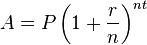
A = P \left(1 + \frac{r}{n}\right)^{nt}Thursday morning, another quiz. Fun right? Today after finishing up example 2 by using the Annual Compound formula. We also talked about the usage of a spread sheet.


*Remember that:
   Tomorrow > Presenting "Financial Planning"
   October 15 or 18 > iPhoto Project is due
   End of this unit > Budgeting Project*

Monday, October 7, 2013

In today's class. Mr. P gave us a new assignment called Personal Budgets, Mr. P has said to finish all of the assignment as it will help in the future and you should finish it someone of the keyterms for some questions are as follow- 

Recurring Expenses: Expenses that you deal with on a regular basis.
Ex: Rent, Orthodontics, Morgage, Car loan

Variable Expenses: Expenses that keep changing weekly or monthly.
Ex: Food, Phone Bill, Clothes, Hydro, Drivers License Fee, Car Insurance

Unexpected Expenses: Expenses that you don't expect to happen from time to time.
Ex:Flat tire, Chip in Window, Health Care, Funeral Expenses.

These terms will help you in some of the starting questions and as well Mr. P has handed back the unit test and has asked to check for any mistakes in counting the marks.

Thursday, October 3, 2013

Budget Unit Key Terms

Today we talked about some key terms and those key terms were:

Budget: A balanced estimate of your income and expenses.
 Ex: Amount of money in your pocket

Regular Income: Income that is received in the same amount.
Ex: Wage, Salary, Income

Variable Income: Income that is received at in different amount almost every time or not received every pay cheaque.
 Ex:Commission, Gifts, Birthday Presents, Bonuses, Tips

Recurring Expenses: Expenses that you deal with on a regular basis.
Ex: Rent, Orthodontics, Morgage, Car loan

Variable Expenses: Expenses that keep changing weekly or monthly.
Ex: Food, Phone Bill, Clothes, Hydro, Drivers License Fee, Car Insurance

Unexpected Expenses: Expenses that you don't expect to happen from time to time.
Ex:Flat tire, Chip in Window, Health Care, Funeral Expenses.